Crypto Wallet Tracer
Paste a public address. The tracer reads the open ledger and returns balance, a transaction sample, the activity window, the hop pattern and a transparent risk signal — then formats all of it into an evidence report you can hand to a bank, an exchange, IC3 or an attorney.
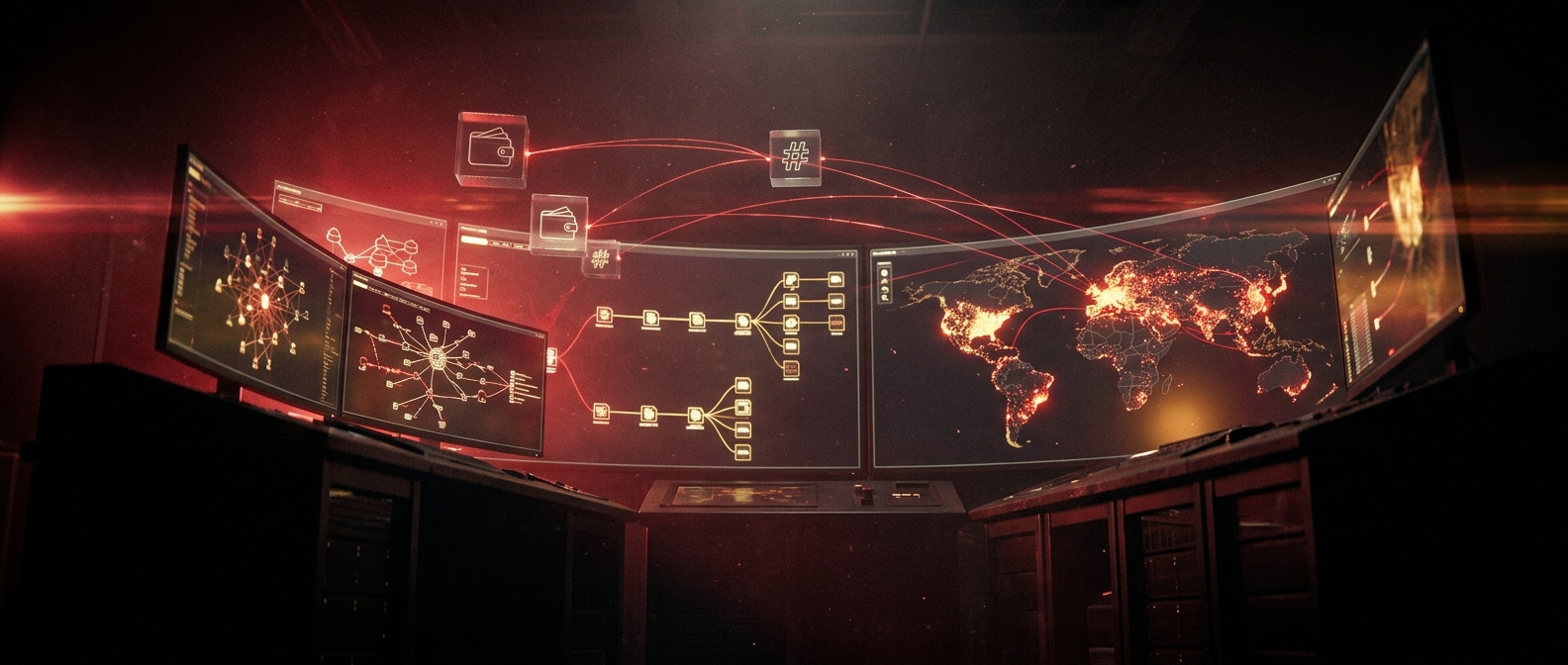
Enter the wallet address
Paste the address you sent funds to, or the address from the scam site.
This tool reads public blockchain data only.
Never share: seed phrase, private key, OTP, remote access or an "unlock fee". This tool needs none of them and will never ask.
Do not close this window — the report is being assembled from live ledger data.
What blockchain data can and cannot do: it proves where funds moved and when — it cannot reveal a person's identity, IP address, device or police station by itself. This tool reports public on-chain signals only, and every risk score is an algorithmic pattern indicator, never a statement about any individual.
Where the money usually goes — and where it can be frozen
The value of a trace depends on whether the receiving address belongs to a party that can act: an exchange, a custodian or a bank. These are the platforms that most commonly appear at the end of a victim's transaction trail, and the ones whose compliance teams can sometimes freeze funds while they are still on-chain.
 Binance
  OKX
OKX  Coinbase
  MetaMask
  Trust Wallet
  Kraken
  Bybit
Bybit  KuCoin
  Ledger
  Tether USDT
  Bitcoin
  Ethereum
 Which chains this tracer can scan
We would rather tell you what is not supported than imply full coverage. Anything below marked "Not yet" is a real gap.
| Network | Ticker | Data source | Status | What you get |
|---|---|---|---|---|
| Ethereum | ETH | Public block indexer | Live | Balance, full transaction history and hop pattern. |
| Solana | SOL | Public JSON-RPC | Live | Balance and signature history from the public mainnet endpoint. |
| Bitcoin | BTC | — | Not yet | UTXO tracing needs a different engine. Use a block explorer for now. |
| BNB Chain | BSC | — | Not yet | Not supported yet — use a public block explorer for now. |
Where the scan data comes from
Every figure in a scan is read live from public blockchain data while the page is open. Nothing is estimated, and nothing is pulled from a private database.
Independent providers, cross-checked
- Ethereum — balance, transaction history and hop pattern, read from public block-indexing services.
- Solana — balance and signature history from the public Solana mainnet endpoint.
- Cross-check — where two providers are reachable, their figures are compared and the agreement is stated in the report.
Your address is never stored. The query goes straight from your browser to the public data providers. This site has no database, no account system and no record of what you scanned.
Supported right now
- Ethereum addresses (0x…)
- Solana addresses (base58)
- Bitcoin and BNB Chain — not yet supported
For a chain that is not listed, use a public block explorer and attach those screenshots to your report. The Report Builder accepts them the same way.
Why a scan can occasionally look short
Public endpoints are rate-limited. Under heavy load a provider may return fewer transactions than exist, or one source may be briefly unavailable. The report always states which providers answered, so a thin result can be re-run and compared rather than trusted blindly.
What a blockchain scan can never tell you
Most "wallet tracer" sites sell the opposite of this list. We publish it because a complaint built on exaggeration gets rejected — and because victims deserve to know exactly what their evidence is worth.
Identify a person
A blockchain address is not a name. No public ledger contains the holder's identity, address or phone number.
Reveal an IP or device
IP addresses and device IDs live in server logs, not on-chain. Any site claiming otherwise is inventing it.
Locate a police station
Jurisdiction is a legal question for your bank and law enforcement — it is not derivable from transaction data.
Recover your funds
Only a bank, exchange or court can freeze or return money. The tracer prepares evidence; it does not move funds.
Turn the trace into a filed complaint.
The Report Builder takes these results and produces the documents that actually move a case forward.